Okada residence
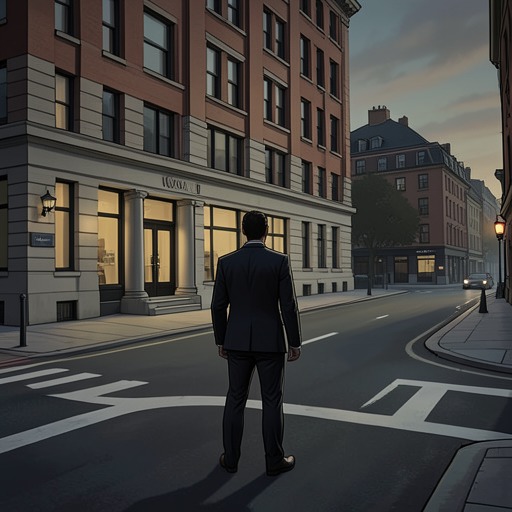
The Wind-Up Bird ChronicleThe Okada residence is the Setagaya house that Toru Okada and Kumiko share after leaving their apartment, a temporary home whose garden and high cinder-block boundary place domestic life beside the abandoned alley. It is where the novel’s ordinary routines—cooking, ironing, answering the telephone, and searching for a missing cat—become entangled with absence and uncertainty. As Kumiko disappears and Toru repeatedly crosses from the house into the alley, the residence becomes a measure of both their former intimacy and his growing estrangement from the world around him.
A Temporary Home
Toru and Kumiko move into the house in the autumn of their second year of marriage, after the apartment they had rented in Koenji is slated for renovation. Toru’s maternal uncle offers them his Setagaya property for a nominal rent, with the understanding that they will leave on three months’ notice when he is ready to redevelop it. The arrangement is practical rather than permanent, but living in a real house, with a small yard, gives the couple the feeling of being a household. The house stands in a quiet residential neighborhood, though it is a long way from the nearest Odakyu Line station.
The house’s boundaries shape the way it meets the neighborhood. There is no gate opening onto the alley: to enter that narrow passage, Toru has to climb over a cinder-block wall about chin-high. From the house, the alley is not a normal route but a separate, awkward space reached by effort. That threshold matters as the missing cat becomes a daily concern and Kumiko directs Toru to look for it there; leaving home increasingly means crossing into an enclosed place that is neither street nor proper path.
Domestic Routines and the Telephone
The residence is first rendered through Toru’s ordinary tasks. When an unfamiliar woman calls, he is in the kitchen boiling spaghetti and listening to Rossini’s overture to The Thieving Magpie. He delays answering until the pasta is nearly done and the music reaches its climax, then picks up the receiver. The interruption is slight, but it brings the outside world directly into the domestic space, where even an ordinary phone call acquires an uncertain edge.
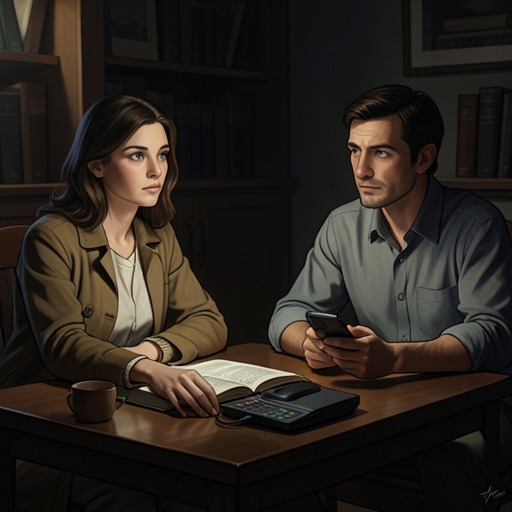
Later, after ironing three shirts and putting the iron and board away, Toru is heading to the kitchen for water when the telephone rings again. This time Kumiko is on the line; the clock reads eleven-thirty, and Toru is relieved to hear his wife’s voice. The call briefly restores the reassuring cadence of a shared home, even as the story’s first mysterious call remains in the background. The residence thus holds both routine contact and the unease of not knowing who may be calling—or what the call may mean.
The missing cat further unsettles domestic routine. Kumiko reminds Toru not to forget the cat, and he checks the dish in the garden: the sardines left there remain untouched, confirming that the animal has not returned. The small garden receives little sun; its soil stays black and moist, and a few hydrangeas occupy one corner. From nearby trees comes the mechanical cry of the bird the couple calls the Wind-up bird, a sound Kumiko has named. The bird’s repeated appearance and cry frame the house as a quiet world that seems to be wound and set in motion from just beyond its garden.
The House Beside the Alley
The alley is an abandoned passage between the back gardens of two rows of houses, about two hundred yards long and barely more than three feet wide. Toru’s uncle tells him that it once connected two streets as a shortcut. During the rapid economic growth of the mid-1950s, new houses crowded the adjoining lots; residents, wary of strangers passing close to their homes, allowed barriers to close both ends. A fence screened off one end, while a cinder-block wall sealed the other. With neither entrance nor exit, the passage became a buffer zone rather than a route, its overgrowth and spiderwebs marking its disuse.
The Okada residence occupies one end of this strange geography. Kumiko has been going to the alley despite the effort required to climb the wall, and Toru wonders why she would visit a place with no practical purpose, especially since she is afraid of spiders. Yet when she tells him to search there for the cat, he obeys. The house is not simply separated from the alley: its wall makes the passage a place Toru must choose to enter, and his repeated crossings turn the boundary into a hinge between domestic waiting and investigation.
On a rainy day, Toru again chooses the cat over the nearby ward pool. He puts on a light raincoat and tennis shoes, leaves his umbrella behind, and climbs the wall. The alley is unusually silent beneath a uniform gray sky; even the bird cries and street sounds are absent. Passing close to the backs of houses, he hears a radio talk show briefly, then watches its sound fade until the callers seem to vanish with it. The passage beside the home becomes more than a route for searching: its silence unsettles Toru’s sense that the surrounding world is fully present.
Memory, Estrangement, and Loss
The house’s role changes as Toru’s search carries him beyond it. In the darkness of the well, memories gain an unusual vividness, and Toru recalls meeting Kumiko eight years earlier in a university-hospital waiting room in Kanda. She had come to care for her mother, while he was visiting a client; his recollection of their first encounter emerges not from a shared domestic scene but from the well’s darkness. The contrast links the household they later make to a past that Toru can now revisit only through an altered, solitary experience.
After Toru climbs out of the well, the neighborhood around the residence feels unfamiliar, as if a new reality has displaced the old one while he was below. The change is registered through quiet and absence: no people, no noise, not even a cicada’s cry. The physical surroundings are still recognizable, but their meaning no longer feels secure. Home remains where Toru returns, yet it cannot restore the unquestioned familiarity he associated with it.
By winter, the nearby Miyawaki house has been demolished. Toru looks through gaps in the fence at a flat, bulldozer-compacted stretch of cold earth where the house, yard, trees, and well once stood; he can hardly believe he descended into the well that had been there. He also looks toward May Kasahara’s house, but she is gone. The vanished well and the absent neighbor sharpen the residence’s significance by contrast: the home still stands, but the landscape around it has been emptied of the places and people that shaped Toru’s search.